
Search anything and hit enter
  • Teams
  • Members
  • Projects
  • Events
  • Calls
  • Jobs
  • publications
  • Software
  • Tools
  • Network
  • Equipment

A little guide for advanced search:

  • Tip 1. You can use quotes "" to search for an exact expression.
    Example: "cell division"
  • Tip 2. You can use + symbol to restrict results containing all words.
    Example: +cell +stem
  • Tip 3. You can use + and - symbols to force inclusion or exclusion of specific words.
    Example: +cell -stem
e.g. searching for members in projects tagged cancer
Search for
Count
IN
OUT
Content 1
  • member
  • team
  • department
  • center
  • program_project
  • nrc
  • whocc
  • project
  • software
  • tool
  • patent
  • Administrative Staff
  • Assistant Professor
  • Associate Professor
  • Clinical Research Assistant
  • Clinical Research Nurse
  • Clinician Researcher
  • Department Manager
  • Dual-education Student
  • Full Professor
  • Honorary Professor
  • Lab assistant
  • Master Student
  • MD-PhD Student
  • Medical Staff
  • Non-permanent Researcher
  • Nursing Staff
  • Permanent Researcher
  • Pharmacist
  • PhD Student
  • Physician
  • Post-doc
  • Prize
  • Project Manager
  • Research Associate
  • Research Engineer
  • Retired scientist
  • Technician
  • Undergraduate Student
  • Veterinary
  • Visiting Scientist
  • Deputy Director of Center
  • Deputy Director of Department
  • Deputy Director of National Reference Center
  • Deputy Head of Facility
  • Director of Center
  • Director of Department
  • Director of Institute
  • Director of National Reference Center
  • Group Leader
  • Head of Facility
  • Head of Operations
  • Head of Structure
  • Honorary President of the Departement
  • Labex Coordinator
Content 2
  • member
  • team
  • department
  • center
  • program_project
  • nrc
  • whocc
  • project
  • software
  • tool
  • patent
  • Administrative Staff
  • Assistant Professor
  • Associate Professor
  • Clinical Research Assistant
  • Clinical Research Nurse
  • Clinician Researcher
  • Department Manager
  • Dual-education Student
  • Full Professor
  • Honorary Professor
  • Lab assistant
  • Master Student
  • MD-PhD Student
  • Medical Staff
  • Non-permanent Researcher
  • Nursing Staff
  • Permanent Researcher
  • Pharmacist
  • PhD Student
  • Physician
  • Post-doc
  • Prize
  • Project Manager
  • Research Associate
  • Research Engineer
  • Retired scientist
  • Technician
  • Undergraduate Student
  • Veterinary
  • Visiting Scientist
  • Deputy Director of Center
  • Deputy Director of Department
  • Deputy Director of National Reference Center
  • Deputy Head of Facility
  • Director of Center
  • Director of Department
  • Director of Institute
  • Director of National Reference Center
  • Group Leader
  • Head of Facility
  • Head of Operations
  • Head of Structure
  • Honorary President of the Departement
  • Labex Coordinator
Search
Go back
Scroll to top
Share
© Institut Pasteur et Institut Imagine
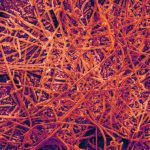
Scanning electron micrograph of segmented filamentous bacterium (SFB). Segmented filamentous bacteria (SFB) are bacteria from the Clostridiaceae family that colonize the intestines of many species, likely including humans, without causing disease; they live in symbiosis with epithelial cells and are involved in the maturation of intestinal immunity.
Scientific Fields
Diseases
Organisms
Applications
Technique

Published in Mucosal immunology - 28 Nov 2025

Torné J, Chica C, Camarasa T, Jagla B, Dias ME, Zellner A, Mella S, Libri V, Hamon MA

Link to Pubmed [PMID] – 41320160

Link to DOI – 10.1016/j.mucimm.2025.11.012

Mucosal Immunol 2025 Nov; ():

Natural Killer (NK) cells are cytotoxic lymphocytes and key mediators of innate immunity, essential for combating viral infections and cancer. Notably, they exhibit immunological memory, generating a stronger response upon re-exposure to the same stimulus. While NK cell memory holds promise for infection control, its role in bacterial infections remains poorly understood. Previously, we demonstrated that Streptococcus pneumoniae induces long-term, specific, and protective NK cell memory. In this study, we performed single-cell RNA-seq to uncover how NK cells respond to S. pneumoniae infection. Our findings reveal that challenged Memory (cMemory) NK cells undergo transcriptional reprogramming following S. pneumoniae infection and have a differential transcriptional response upon reinfection. In addition, we identified distinct cMemory NK cell subpopulations, with responding cMemory NK cells displaying a general enhanced activation, proliferation, and cytotoxic activity. These findings support a novel role for NK cells in the context of bacterial infections, thereby opening avenues for harnessing the potential of innate immune memory for therapeutic applications.