



Link to Pubmed [PMID] – 41273172
Link to HAL – Click here
Link to DOI – 10.1093/nar/gkaf1143
Nucleic Acids Res 2025 Nov; 53(21):
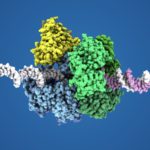
DNA polymerases (DNAPs) are indispensable enzymes that play central roles in biology, by replicating and repairing genetic material, as well as in biotechnology, by fueling such innovations as polymerase chain reaction (PCR), cloning, and DNA sequencing. Replicative DNAPs possess dual catalytic activities that work together for high accuracy replication: a selective DNA-dependent DNA polymerase activity for synthesizing DNA and a proofreading exonuclease activity for removing misincorporated nucleotides. Despite their precision, DNA polymerases occasionally make errors, and understanding the mechanisms behind these mistakes is essential to fully leverage these enzymes. Indeed, measuring DNA polymerase fidelity not only reveals the basis of their accuracy, but also enables rational modulation of their fidelity. Here we employ a highly accurate Pacific Biosciences sequencing workflow that leverages long-read, non-PCR-based technology to measure DNAP error rates and profiles. By measuring the fidelity of the four primary replicative DNA polymerase families, A, B, C, and D, measurements uncovered remarkably diverse family specific error profiles. Factors that influence DNAP fidelity, such as deoxynucleoside triphosphate ratios, replication components, and exonuclease and polymerase active site mutations, are further explored. This work deepens our understanding of DNA replication, the mechanisms that underly DNA polymerase fidelity, and informs development of advanced DNA polymerase-based tools for biotechnology.DNA polymerases are the engines of genetic replication and the backbone of many biotechnologies, from PCR to cloning and sequencing. These enzymes are usually very precise as they both synthesize DNA and correct mistakes. However, they are not perfect and sometimes create errors. The work by Betancurt et al. uses Pacific Biosciences single-molecule sequencing to create a highly accurate long-read fidelity assay to measure how often and in what ways DNA polymerases make errors. Here they compared four major families of replicative polymerases and found that each has its own unique pattern of mistakes. They further explored factors that affect their accuracy, such as deoxynucleoside triphosphate ratios and mutations in the enzyme active sites. These findings improve our understanding of how DNA is faithfully copied and opens the door to designing better polymerases for biotechnology.