

Tapez votre recherche ici
  • Équipes
  • Membres
  • Projets
  • Événements
  • Appels
  • Emplois
  • publications
  • Logiciel
  • Outils
  • Réseau
  • Équipement

Un petit guide pour l'utilisation de la recherche avancée :

  • Tip 1. Utilisez "" afin de chercher une expression exacte.
    Exemple : "division cellulaire"
  • Tip 2. Utilisez + afin de rendre obligatoire la présence d'un mot.
    Exemple : +cellule +stem
  • Tip 3. Utilisez + et - afin de forcer une inclusion ou exclusion d'un mot.
    Exemple : +cellule -stem
e.g. searching for members in projects tagged cancer
Rechercher
Compteur
IN
OUT
Contenu 1
  • member
  • team
  • department
  • center
  • program_project
  • nrc
  • whocc
  • project
  • software
  • tool
  • patent
  • Personnel Administratif
  • Chargé(e) de Recherche Expert
  • Directeur(trice) de Recherche
  • Assistant(e) de Recherche Clinique
  • Infirmier(e) de Recherche Clinique
  • Chercheur(euse) Clinicien(ne)
  • Manager de département
  • Etudiant(e) en alternance
  • Professeur(e)
  • Professeur Honoraire
  • Aide technique
  • Etudiant(e) en Master
  • MD-PhD
  • Personnel médical
  • Chercheur(euse) Contractuel(le)
  • Personnel infirmier
  • Chercheur(euse) Permanent(e)
  • Pharmacien(ne)
  • Etudiant(e) en thèse
  • Médecin
  • Post-doctorant(e)
  • Prize
  • Chef(fe) de Projet
  • Chargé(e) de Recherche
  • Ingénieur(e) de Recherche
  • Chercheur(euse) Retraité(e)
  • Technicien(ne)
  • Etudiant(e)
  • Vétérinaire
  • Visiteur(euse) Scientifique
  • Directeur(trice) Adjoint(e) de Centre
  • Directeur(trice) Adjoint(e) de Départment
  • Directeur(trice) Adjoint(e) de Centre National de Référence
  • Directeur(trice) Adjoint(e) de Plateforme
  • Directeur(trice) de Centre
  • Directeur(trice) de Départment
  • Directeur(trice) d'Institut
  • Directeur(trice) de Centre National de Référence
  • Chef(fe) de Groupe
  • Responsable de Plateforme
  • Responsable opérationnel et administratif
  • Responsable de Structure
  • Président(e) d'honneur de Département
  • Coordinateur(trice) du Labex
Contenu 2
  • member
  • team
  • department
  • center
  • program_project
  • nrc
  • whocc
  • project
  • software
  • tool
  • patent
  • Personnel Administratif
  • Chargé(e) de Recherche Expert
  • Directeur(trice) de Recherche
  • Assistant(e) de Recherche Clinique
  • Infirmier(e) de Recherche Clinique
  • Chercheur(euse) Clinicien(ne)
  • Manager de département
  • Etudiant(e) en alternance
  • Professeur(e)
  • Professeur Honoraire
  • Aide technique
  • Etudiant(e) en Master
  • MD-PhD
  • Personnel médical
  • Chercheur(euse) Contractuel(le)
  • Personnel infirmier
  • Chercheur(euse) Permanent(e)
  • Pharmacien(ne)
  • Etudiant(e) en thèse
  • Médecin
  • Post-doctorant(e)
  • Prize
  • Chef(fe) de Projet
  • Chargé(e) de Recherche
  • Ingénieur(e) de Recherche
  • Chercheur(euse) Retraité(e)
  • Technicien(ne)
  • Etudiant(e)
  • Vétérinaire
  • Visiteur(euse) Scientifique
  • Directeur(trice) Adjoint(e) de Centre
  • Directeur(trice) Adjoint(e) de Départment
  • Directeur(trice) Adjoint(e) de Centre National de Référence
  • Directeur(trice) Adjoint(e) de Plateforme
  • Directeur(trice) de Centre
  • Directeur(trice) de Départment
  • Directeur(trice) d'Institut
  • Directeur(trice) de Centre National de Référence
  • Chef(fe) de Groupe
  • Responsable de Plateforme
  • Responsable opérationnel et administratif
  • Responsable de Structure
  • Président(e) d'honneur de Département
  • Coordinateur(trice) du Labex
Recherche
Revenir
Haut de page
Partagez
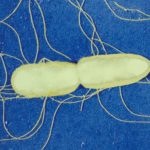
© Institut Pasteur/Antoinette Ryter
Salmonella spp. Bactéries à Gram négatif, aérobies ou anaérobies facultatifs à transmission orofécale. Les salmonelles majeures (sérotype typhi et sérotype paratyphi) sont responsables des fièvres typhoïde et paratyphoïde chez l'homme uniquement ; les salmonelles mineures (sérotype typhimurium et sérotype enteritidis) sont impliquées dans 30 à 60 % des gastroentérites et toxiinfections d'origine alimentaire. Image colorisée.
Publication : Emerging infectious diseases

Lessons from 5 Years of Routine Whole-Genome Sequencing for Epidemiologic Surveillance of Shiga Toxin-Producing Escherichia coli, France, 2018-2022.

Domaines Scientifiques
Maladies
Organismes
Applications
Technique

Publié sur Emerging infectious diseases - 01 mai 2025

Jones G, Nodari CS, Fabre L, de Valk H, Noel H, Cointe A, Bonacorsi S, Weill FX, Le Strat Y

Lien vers Pubmed [PMID] – 40359096

Lien DOI – 10.3201/eid3113.241950

Emerg Infect Dis 2025 May; 31(13): 117-128

Whole-genome sequencing (WGS) is routine for surveillance of Shiga toxin-producing Escherichia coli human isolates in France. Protocols use EnteroBase hierarchical clustering at <5 allelic differences (HC5) as screening for cluster detection. We assessed current implementation after 5 years for 1,002 sequenced isolates. From genomic distances of serotypes O26:H11, O157:H7, O80:H2, and O103:H2, we determined statistical thresholds for cluster determination and compared those with HC5 clusters. Thresholds varied by serotype, 5-16 allelic distances and 15-20 single-nucleotide polymorphisms, showing limits of a single-threshold approach. We confirmed validity of HC5 screening for 3 serotypes because statistical thresholds had limited effect on isolate clustering (high sensitivity and specificity). For O80:H2, results suggest that HC5 is less reliable, and other approaches should be explored. Public health officials should regularly assess WGS used for Shiga toxin-producing E. coli surveillance to account for serotype and genomic evolution and to interpret WGS-linked isolates in light of epidemiologic data.