
Tapez votre recherche ici
  • Équipes
  • Membres
  • Projets
  • Événements
  • Appels
  • Emplois
  • publications
  • Logiciel
  • Outils
  • Réseau
  • Équipement

Un petit guide pour l'utilisation de la recherche avancée :

  • Tip 1. Utilisez "" afin de chercher une expression exacte.
    Exemple : "division cellulaire"
  • Tip 2. Utilisez + afin de rendre obligatoire la présence d'un mot.
    Exemple : +cellule +stem
  • Tip 3. Utilisez + et - afin de forcer une inclusion ou exclusion d'un mot.
    Exemple : +cellule -stem
e.g. searching for members in projects tagged cancer
Rechercher
Compteur
IN
OUT
Contenu 1
  • member
  • team
  • department
  • center
  • program_project
  • nrc
  • whocc
  • project
  • software
  • tool
  • patent
  • Personnel Administratif
  • Chargé(e) de Recherche Expert
  • Directeur(trice) de Recherche
  • Assistant(e) de Recherche Clinique
  • Infirmier(e) de Recherche Clinique
  • Chercheur(euse) Clinicien(ne)
  • Manager de département
  • Etudiant(e) en alternance
  • Professeur(e)
  • Professeur Honoraire
  • Aide technique
  • Etudiant(e) en Master
  • MD-PhD
  • Personnel médical
  • Chercheur(euse) Contractuel(le)
  • Personnel infirmier
  • Chercheur(euse) Permanent(e)
  • Pharmacien(ne)
  • Etudiant(e) en thèse
  • Médecin
  • Post-doctorant(e)
  • Prize
  • Chef(fe) de Projet
  • Chargé(e) de Recherche
  • Ingénieur(e) de Recherche
  • Chercheur(euse) Retraité(e)
  • Technicien(ne)
  • Etudiant(e)
  • Vétérinaire
  • Visiteur(euse) Scientifique
  • Directeur(trice) Adjoint(e) de Centre
  • Directeur(trice) Adjoint(e) de Départment
  • Directeur(trice) Adjoint(e) de Centre National de Référence
  • Directeur(trice) Adjoint(e) de Plateforme
  • Directeur(trice) de Centre
  • Directeur(trice) de Départment
  • Directeur(trice) d'Institut
  • Directeur(trice) de Centre National de Référence
  • Chef(fe) de Groupe
  • Responsable de Plateforme
  • Responsable opérationnel et administratif
  • Responsable de Structure
  • Président(e) d'honneur de Département
  • Coordinateur(trice) du Labex
Contenu 2
  • member
  • team
  • department
  • center
  • program_project
  • nrc
  • whocc
  • project
  • software
  • tool
  • patent
  • Personnel Administratif
  • Chargé(e) de Recherche Expert
  • Directeur(trice) de Recherche
  • Assistant(e) de Recherche Clinique
  • Infirmier(e) de Recherche Clinique
  • Chercheur(euse) Clinicien(ne)
  • Manager de département
  • Etudiant(e) en alternance
  • Professeur(e)
  • Professeur Honoraire
  • Aide technique
  • Etudiant(e) en Master
  • MD-PhD
  • Personnel médical
  • Chercheur(euse) Contractuel(le)
  • Personnel infirmier
  • Chercheur(euse) Permanent(e)
  • Pharmacien(ne)
  • Etudiant(e) en thèse
  • Médecin
  • Post-doctorant(e)
  • Prize
  • Chef(fe) de Projet
  • Chargé(e) de Recherche
  • Ingénieur(e) de Recherche
  • Chercheur(euse) Retraité(e)
  • Technicien(ne)
  • Etudiant(e)
  • Vétérinaire
  • Visiteur(euse) Scientifique
  • Directeur(trice) Adjoint(e) de Centre
  • Directeur(trice) Adjoint(e) de Départment
  • Directeur(trice) Adjoint(e) de Centre National de Référence
  • Directeur(trice) Adjoint(e) de Plateforme
  • Directeur(trice) de Centre
  • Directeur(trice) de Départment
  • Directeur(trice) d'Institut
  • Directeur(trice) de Centre National de Référence
  • Chef(fe) de Groupe
  • Responsable de Plateforme
  • Responsable opérationnel et administratif
  • Responsable de Structure
  • Président(e) d'honneur de Département
  • Coordinateur(trice) du Labex
Recherche
Revenir
Haut de page
Partagez
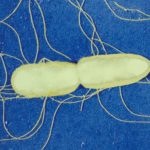
© Institut Pasteur/Antoinette Ryter
Salmonella spp. Bactéries à Gram négatif, aérobies ou anaérobies facultatifs à transmission orofécale. Les salmonelles majeures (sérotype typhi et sérotype paratyphi) sont responsables des fièvres typhoïde et paratyphoïde chez l'homme uniquement ; les salmonelles mineures (sérotype typhimurium et sérotype enteritidis) sont impliquées dans 30 à 60 % des gastroentérites et toxiinfections d'origine alimentaire. Image colorisée.
Publication : Microbial genomics

Genomic characterisation of multidrug-resistant Salmonella enterica serovar Kentucky ST198 isolates from various sources in Algeria, North Africa.

Domaines Scientifiques
Maladies
Organismes
Applications
Technique

Publié sur Microbial genomics - 01 nov. 2025

Benamrouche N, Belkader C, Deriet-Ammar A, Pardos de la Gandara M, Sihem Zemam S, Njamkepo E, Sadat S, Msela A, Fabre L, Mechouet F, Torkya Boutabba D, Slimani R, Weill FX

Lien vers Pubmed [PMID] – 41288468

Lien DOI – 10.1099/mgen.0.001581

Microb Genom 2025 Nov; 11(11):

Salmonella enterica serovar Kentucky (S. Kentucky) sequence type (ST) 198 has emerged as a globally disseminated multidrug-resistant (MDR) lineage posing significant public health challenges. The aim of this study was to characterise 125 S. Kentucky ST198 isolates collected from various sources in Algeria, including humans, animals, food and the environment, or obtained from humans in France (travellers returning from Algeria), between 2015 and 2022. Whole-genome sequencing was performed on 125 isolates to assess their genetic diversity and antimicrobial resistance (AMR) profiles. Phylogenetic analysis revealed that the Algerian S. Kentucky ST198 isolates were closely related to each other and belonged to the MDR lineage that emerged in Egypt before disseminating into Africa, the Middle East, Asia and Europe. These isolates also clustered closely with European and North African isolates carrying the gyrA_D87N mutation. We found that 90% of the isolates had MDR phenotypes, with resistance to critically important antibiotics, including ciprofloxacin, third-generation cephalosporins, azithromycin and chloramphenicol. Genomic analysis revealed that all the isolates had the three known non-synonymous resistance mutations in the quinolone-resistance-determining regions of DNA gyrase (gyrA) and DNA topoisomerase IV (parC). Multiple AMR genes were also identified, including bla CTX-M-15, bla CMY-2, bla CMY-4, qnrB19, mph(A), cmlA1 and floR. The Algerian isolates also contained the main variant of SGI1, SGI1-K, with multiple rearrangements. Plasmid replicon analysis revealed that the most frequent plasmid types were IncI1 (13.6%), Col156 (8.8%) and Col(pVC) (8%). This study provides the first comprehensive genomic insight into S. Kentucky ST198 in Algeria, highlighting the urgent need for a reinforcement of AMR surveillance and control measures in the region. These findings enhance our overall understanding of the epidemiology and evolution of MDR Salmonella and highlight the importance of a One Health approach for combating the spread of resistant pathogens.