
Tapez votre recherche ici
  • Équipes
  • Membres
  • Projets
  • Événements
  • Appels
  • Emplois
  • publications
  • Logiciel
  • Outils
  • Réseau
  • Équipement

Un petit guide pour l'utilisation de la recherche avancée :

  • Tip 1. Utilisez "" afin de chercher une expression exacte.
    Exemple : "division cellulaire"
  • Tip 2. Utilisez + afin de rendre obligatoire la présence d'un mot.
    Exemple : +cellule +stem
  • Tip 3. Utilisez + et - afin de forcer une inclusion ou exclusion d'un mot.
    Exemple : +cellule -stem
e.g. searching for members in projects tagged cancer
Rechercher
Compteur
IN
OUT
Contenu 1
  • member
  • team
  • department
  • center
  • program_project
  • nrc
  • whocc
  • project
  • software
  • tool
  • patent
  • Personnel Administratif
  • Chargé(e) de Recherche Expert
  • Directeur(trice) de Recherche
  • Assistant(e) de Recherche Clinique
  • Infirmier(e) de Recherche Clinique
  • Chercheur(euse) Clinicien(ne)
  • Manager de département
  • Etudiant(e) en alternance
  • Professeur(e)
  • Professeur Honoraire
  • Aide technique
  • Etudiant(e) en Master
  • MD-PhD
  • Personnel médical
  • Chercheur(euse) Contractuel(le)
  • Personnel infirmier
  • Chercheur(euse) Permanent(e)
  • Pharmacien(ne)
  • Etudiant(e) en thèse
  • Médecin
  • Post-doctorant(e)
  • Prize
  • Chef(fe) de Projet
  • Chargé(e) de Recherche
  • Ingénieur(e) de Recherche
  • Chercheur(euse) Retraité(e)
  • Technicien(ne)
  • Etudiant(e)
  • Vétérinaire
  • Visiteur(euse) Scientifique
  • Directeur(trice) Adjoint(e) de Centre
  • Directeur(trice) Adjoint(e) de Départment
  • Directeur(trice) Adjoint(e) de Centre National de Référence
  • Directeur(trice) Adjoint(e) de Plateforme
  • Directeur(trice) de Centre
  • Directeur(trice) de Départment
  • Directeur(trice) d'Institut
  • Directeur(trice) de Centre National de Référence
  • Chef(fe) de Groupe
  • Responsable de Plateforme
  • Responsable opérationnel et administratif
  • Responsable de Structure
  • Président(e) d'honneur de Département
  • Coordinateur(trice) du Labex
Contenu 2
  • member
  • team
  • department
  • center
  • program_project
  • nrc
  • whocc
  • project
  • software
  • tool
  • patent
  • Personnel Administratif
  • Chargé(e) de Recherche Expert
  • Directeur(trice) de Recherche
  • Assistant(e) de Recherche Clinique
  • Infirmier(e) de Recherche Clinique
  • Chercheur(euse) Clinicien(ne)
  • Manager de département
  • Etudiant(e) en alternance
  • Professeur(e)
  • Professeur Honoraire
  • Aide technique
  • Etudiant(e) en Master
  • MD-PhD
  • Personnel médical
  • Chercheur(euse) Contractuel(le)
  • Personnel infirmier
  • Chercheur(euse) Permanent(e)
  • Pharmacien(ne)
  • Etudiant(e) en thèse
  • Médecin
  • Post-doctorant(e)
  • Prize
  • Chef(fe) de Projet
  • Chargé(e) de Recherche
  • Ingénieur(e) de Recherche
  • Chercheur(euse) Retraité(e)
  • Technicien(ne)
  • Etudiant(e)
  • Vétérinaire
  • Visiteur(euse) Scientifique
  • Directeur(trice) Adjoint(e) de Centre
  • Directeur(trice) Adjoint(e) de Départment
  • Directeur(trice) Adjoint(e) de Centre National de Référence
  • Directeur(trice) Adjoint(e) de Plateforme
  • Directeur(trice) de Centre
  • Directeur(trice) de Départment
  • Directeur(trice) d'Institut
  • Directeur(trice) de Centre National de Référence
  • Chef(fe) de Groupe
  • Responsable de Plateforme
  • Responsable opérationnel et administratif
  • Responsable de Structure
  • Président(e) d'honneur de Département
  • Coordinateur(trice) du Labex
Recherche
Revenir
Haut de page
Partagez
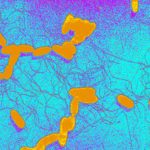
© Institut Pasteur/Antoinette Ryter
Salmonella spp. Bactéries à Gram négatif, aérobies ou anaérobies facultatifs à transmission orofécale. Les salmonelles majeures (sérotype typhi et sérotype paratyphi) sont responsables des fièvres typhoïde et paratyphoïde chez l'homme uniquement ; les salmonelles mineures (sérotype typhimurium et sérotype enteritidis) sont impliquées dans 30 à 60 % des gastroentérites et toxiinfections d'origine alimentaire. Image colorisée.
Publication : Nature medicine

Genomic census of invasive nontyphoidal Salmonella infections reveals global and local human-to-human transmission.

Domaines Scientifiques
Maladies
Organismes
Applications
Technique

Publié sur Nature medicine - 01 juil. 2025

Zhou H, Jia C, Shen P, Huang C, Teng L, Wu B, Wang Z, Wang H, Xiao Y, Baker S, Weill FX, Li Y, Yue M

Lien vers Pubmed [PMID] – 40205197

Lien DOI – 10.1038/s41591-025-03644-4

Nat Med 2025 Jul; 31(7): 2325-2334

Extraintestinal infections caused by Enterobacteriaceae represent a global concern, further exacerbated by the growing prevalence of antimicrobial resistance (AMR). Among these, invasive nontyphoidal Salmonella (iNTS) infections have become increasingly challenging to manage, and their global spread remains poorly understood. Here we compiled 1,115 patient records and generated a comprehensive genomic dataset on iNTS. Age and sex emerged as significant risk factors, with Salmonella Enteritidis identified as a major cause. We observed serovar-specific AMR patterns, with notable resistance to fluoroquinolones and third-generation cephalosporins. A global phylogenomic analysis of Enteritidis revealed three distinct clades, highlighting the accumulation of AMR determinants during its international spread. Importantly, our genomic and transmission analyses suggest that iNTS infections may involve human-to-human transmission, with diarrheal patients acting as potential intermediaries, deviating from typical zoonotic pathways. Collectively, our newly generated cohort and iNTS genomic dataset provide a framework for precise local iNTS burden and underscore emerging transmission trends.