
Tapez votre recherche ici
  • Équipes
  • Membres
  • Projets
  • Événements
  • Appels
  • Emplois
  • publications
  • Logiciel
  • Outils
  • Réseau
  • Équipement

Un petit guide pour l'utilisation de la recherche avancée :

  • Tip 1. Utilisez "" afin de chercher une expression exacte.
    Exemple : "division cellulaire"
  • Tip 2. Utilisez + afin de rendre obligatoire la présence d'un mot.
    Exemple : +cellule +stem
  • Tip 3. Utilisez + et - afin de forcer une inclusion ou exclusion d'un mot.
    Exemple : +cellule -stem
e.g. searching for members in projects tagged cancer
Rechercher
Compteur
IN
OUT
Contenu 1
  • member
  • team
  • department
  • center
  • program_project
  • nrc
  • whocc
  • project
  • software
  • tool
  • patent
  • Personnel Administratif
  • Chargé(e) de Recherche Expert
  • Directeur(trice) de Recherche
  • Assistant(e) de Recherche Clinique
  • Infirmier(e) de Recherche Clinique
  • Chercheur(euse) Clinicien(ne)
  • Manager de département
  • Etudiant(e) en alternance
  • Professeur(e)
  • Professeur Honoraire
  • Aide technique
  • Etudiant(e) en Master
  • MD-PhD
  • Personnel médical
  • Chercheur(euse) Contractuel(le)
  • Personnel infirmier
  • Chercheur(euse) Permanent(e)
  • Pharmacien(ne)
  • Etudiant(e) en thèse
  • Médecin
  • Post-doctorant(e)
  • Prize
  • Chef(fe) de Projet
  • Chargé(e) de Recherche
  • Ingénieur(e) de Recherche
  • Chercheur(euse) Retraité(e)
  • Technicien(ne)
  • Etudiant(e)
  • Vétérinaire
  • Visiteur(euse) Scientifique
  • Directeur(trice) Adjoint(e) de Centre
  • Directeur(trice) Adjoint(e) de Départment
  • Directeur(trice) Adjoint(e) de Centre National de Référence
  • Directeur(trice) Adjoint(e) de Plateforme
  • Directeur(trice) de Centre
  • Directeur(trice) de Départment
  • Directeur(trice) d'Institut
  • Directeur(trice) de Centre National de Référence
  • Chef(fe) de Groupe
  • Responsable de Plateforme
  • Responsable opérationnel et administratif
  • Responsable de Structure
  • Président(e) d'honneur de Département
  • Coordinateur(trice) du Labex
Contenu 2
  • member
  • team
  • department
  • center
  • program_project
  • nrc
  • whocc
  • project
  • software
  • tool
  • patent
  • Personnel Administratif
  • Chargé(e) de Recherche Expert
  • Directeur(trice) de Recherche
  • Assistant(e) de Recherche Clinique
  • Infirmier(e) de Recherche Clinique
  • Chercheur(euse) Clinicien(ne)
  • Manager de département
  • Etudiant(e) en alternance
  • Professeur(e)
  • Professeur Honoraire
  • Aide technique
  • Etudiant(e) en Master
  • MD-PhD
  • Personnel médical
  • Chercheur(euse) Contractuel(le)
  • Personnel infirmier
  • Chercheur(euse) Permanent(e)
  • Pharmacien(ne)
  • Etudiant(e) en thèse
  • Médecin
  • Post-doctorant(e)
  • Prize
  • Chef(fe) de Projet
  • Chargé(e) de Recherche
  • Ingénieur(e) de Recherche
  • Chercheur(euse) Retraité(e)
  • Technicien(ne)
  • Etudiant(e)
  • Vétérinaire
  • Visiteur(euse) Scientifique
  • Directeur(trice) Adjoint(e) de Centre
  • Directeur(trice) Adjoint(e) de Départment
  • Directeur(trice) Adjoint(e) de Centre National de Référence
  • Directeur(trice) Adjoint(e) de Plateforme
  • Directeur(trice) de Centre
  • Directeur(trice) de Départment
  • Directeur(trice) d'Institut
  • Directeur(trice) de Centre National de Référence
  • Chef(fe) de Groupe
  • Responsable de Plateforme
  • Responsable opérationnel et administratif
  • Responsable de Structure
  • Président(e) d'honneur de Département
  • Coordinateur(trice) du Labex
Recherche
Revenir
Haut de page
Partagez
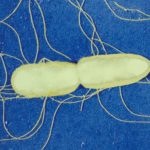
© Institut Pasteur/Antoinette Ryter
Salmonella spp. Bactéries à Gram négatif, aérobies ou anaérobies facultatifs à transmission orofécale. Les salmonelles majeures (sérotype typhi et sérotype paratyphi) sont responsables des fièvres typhoïde et paratyphoïde chez l'homme uniquement ; les salmonelles mineures (sérotype typhimurium et sérotype enteritidis) sont impliquées dans 30 à 60 % des gastroentérites et toxiinfections d'origine alimentaire. Image colorisée.
Publication : International journal of medical microbiology : IJMM

Emergence and genetic heterogeneity of STEC O113:H4: insights from whole-genome sequences of isolates across human and non-human sources.

Domaines Scientifiques
Maladies
Organismes
Applications
Technique

Publié sur International journal of medical microbiology : IJMM - 26 nov. 2025

Crombé F, Auvray F, van Hoek AHAM, Verhaegen B, De Keersmaecker SCJ, Nodari CS, Cointe A, Mainil J, Willis C, Johannessen GS, Litjens R, Stassen J, Piérard D

Lien vers Pubmed [PMID] – 41317515

Lien DOI – 10.1016/j.ijmm.2025.151688

Int J Med Microbiol 2025 Nov; 321(): 151688

The increased detection of Shiga toxin-producing Escherichia coli (STEC) O113:H4 among human cases in Belgium questions the importance of this serotype as an emerging pathogen. However, detailed information focusing on serotype O113:H4 from human and non-human sources remains limited. We analysed a collection of 140 STEC O113:H4 isolates and their whole genomes, originating from animal hosts (cattle, deer, goats, and sheep), food, and humans, to determine their genetic relationship and assess key virulence genes. All STEC O113:H4 genomes lacked the locus of enterocyte effacement (LEE) and belonged to Pasteur Sequence Type (pST) 367 complex, dominated by pST367 (ehxA-, stx2d+) and pST1729 (ehxA+, stx2b+). Compared to stx2d+ isolates, stx2b+ isolates carried on median more virulence factors, which might thus contribute to enhanced pathogenicity. Besides, humans appear to be infected with distinct subgroups of STEC O113:H4 carrying distinct stx subtypes and originating from potentially different sources: deer, goats, and sheep for STEC carrying stx2b (alone or in combination with stx1c) and mainly cattle for STEC carrying stx2d. Our results call for improved understanding and continuous surveillance of emerging STEC O113:H4.