

Search anything and hit enter
  • Teams
  • Members
  • Projects
  • Events
  • Calls
  • Jobs
  • publications
  • Software
  • Tools
  • Network
  • Equipment

A little guide for advanced search:

  • Tip 1. You can use quotes "" to search for an exact expression.
    Example: "cell division"
  • Tip 2. You can use + symbol to restrict results containing all words.
    Example: +cell +stem
  • Tip 3. You can use + and - symbols to force inclusion or exclusion of specific words.
    Example: +cell -stem
e.g. searching for members in projects tagged cancer
Search for
Count
IN
OUT
Content 1
  • member
  • team
  • department
  • center
  • program_project
  • nrc
  • whocc
  • project
  • software
  • tool
  • patent
  • Administrative Staff
  • Assistant Professor
  • Associate Professor
  • Clinical Research Assistant
  • Clinical Research Nurse
  • Clinician Researcher
  • Department Manager
  • Dual-education Student
  • Full Professor
  • Honorary Professor
  • Lab assistant
  • Master Student
  • MD-PhD Student
  • Medical Staff
  • Non-permanent Researcher
  • Nursing Staff
  • Permanent Researcher
  • Pharmacist
  • PhD Student
  • Physician
  • Post-doc
  • Prize
  • Project Manager
  • Research Associate
  • Research Engineer
  • Retired scientist
  • Technician
  • Undergraduate Student
  • Veterinary
  • Visiting Scientist
  • Deputy Director of Center
  • Deputy Director of Department
  • Deputy Director of National Reference Center
  • Deputy Head of Facility
  • Director of Center
  • Director of Department
  • Director of Institute
  • Director of National Reference Center
  • Group Leader
  • Head of Facility
  • Head of Operations
  • Head of Structure
  • Honorary President of the Departement
  • Labex Coordinator
Content 2
  • member
  • team
  • department
  • center
  • program_project
  • nrc
  • whocc
  • project
  • software
  • tool
  • patent
  • Administrative Staff
  • Assistant Professor
  • Associate Professor
  • Clinical Research Assistant
  • Clinical Research Nurse
  • Clinician Researcher
  • Department Manager
  • Dual-education Student
  • Full Professor
  • Honorary Professor
  • Lab assistant
  • Master Student
  • MD-PhD Student
  • Medical Staff
  • Non-permanent Researcher
  • Nursing Staff
  • Permanent Researcher
  • Pharmacist
  • PhD Student
  • Physician
  • Post-doc
  • Prize
  • Project Manager
  • Research Associate
  • Research Engineer
  • Retired scientist
  • Technician
  • Undergraduate Student
  • Veterinary
  • Visiting Scientist
  • Deputy Director of Center
  • Deputy Director of Department
  • Deputy Director of National Reference Center
  • Deputy Head of Facility
  • Director of Center
  • Director of Department
  • Director of Institute
  • Director of National Reference Center
  • Group Leader
  • Head of Facility
  • Head of Operations
  • Head of Structure
  • Honorary President of the Departement
  • Labex Coordinator
Search
Go back
Scroll to top
Share
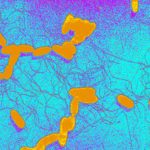
© Institut Pasteur/Antoinette Ryter
Salmonella spp. Bactéries à Gram négatif, aérobies ou anaérobies facultatifs à transmission orofécale. Les salmonelles majeures (sérotype typhi et sérotype paratyphi) sont responsables des fièvres typhoïde et paratyphoïde chez l'homme uniquement ; les salmonelles mineures (sérotype typhimurium et sérotype enteritidis) sont impliquées dans 30 à 60 % des gastroentérites et toxiinfections d'origine alimentaire. Image colorisée.
Publication : Genome medicine

The TyphiNET data visualisation dashboard: unlocking Salmonella Typhi genomics data to support public health.

Scientific Fields
Diseases
Organisms
Applications
Technique

Published in Genome medicine - 09 May 2025

Dyson ZA, Cerdeira L, Sharma V, Carey ME, Holt KE

Link to Pubmed [PMID] – 40346656

Link to DOI – 10.1186/s13073-025-01470-4

Genome Med 2025 May; 17(1): 51

Salmonella enterica subspecies enterica serovar Typhi (abbreviated as ‘Typhi’) is the bacterial agent of typhoid fever. Effective antimicrobial therapy reduces complications and mortality; however, antimicrobial resistance (AMR) is a major problem in many endemic countries. Prevention through vaccination is possible through recently-licensed typhoid conjugate vaccines (TCVs). National immunisation programs are currently being considered or deployed in several countries where AMR prevalence is known to be high, and the Gavi vaccine alliance has provided financial support for their introduction. Pathogen whole genome sequence data are a rich source of information on Typhi variants (genotypes or lineages), AMR prevalence, and mechanisms. However, this information is currently not readily accessible to non-genomics experts, including those driving vaccine implementation or empirical therapy guidance.We developed TyphiNET ( https://www.typhi.net ), an interactive online dashboard for exploring Typhi genotype and AMR distributions derived from publicly available pathogen genome sequences. TyphiNET allows users to explore country-level summaries such as the frequency of pathogen lineages, temporal trends in resistance to clinically relevant antimicrobials, and the specific variants and mechanisms underlying emergent AMR trends. User-driven plots and session reports can be downloaded for ease of sharing. Importantly, TyphiNET is populated by high-quality genome data curated by the Global Typhoid Pathogen Genomics Consortium, analysed using the Pathogenwatch platform, and identified as coming from non-targeted sampling frames that are suitable for estimating AMR prevalence amongst Typhi infections (no personal data is included in the platform). As of February 2024, data from a total of n = 11,836 genomes from 101 countries are available in TyphiNET. We outline case studies illustrating how the dashboard can be used to explore these data and gain insights of relevance to both researchers and public health policy-makers.The TyphiNET dashboard provides an interactive platform for accessing genome-derived data on pathogen variant frequencies to inform typhoid control and intervention strategies. The platform is extensible in terms of both data and features, and provides a model for making complex bacterial genome-derived data accessible to a wide audience.