Search anything and hit enter
  • Teams
  • Members
  • Projects
  • Events
  • Calls
  • Jobs
  • publications
  • Software
  • Tools
  • Network
  • Equipment

A little guide for advanced search:

  • Tip 1. You can use quotes "" to search for an exact expression.
    Example: "cell division"
  • Tip 2. You can use + symbol to restrict results containing all words.
    Example: +cell +stem
  • Tip 3. You can use + and - symbols to force inclusion or exclusion of specific words.
    Example: +cell -stem
e.g. searching for members in projects tagged cancer
Search for
Count
IN
OUT
Content 1
  • member
  • team
  • department
  • center
  • program_project
  • nrc
  • whocc
  • project
  • software
  • tool
  • patent
  • Administrative Staff
  • Assistant Professor
  • Associate Professor
  • Clinical Research Assistant
  • Clinical Research Nurse
  • Clinician Researcher
  • Department Manager
  • Dual-education Student
  • Full Professor
  • Honorary Professor
  • Lab assistant
  • Master Student
  • MD-PhD Student
  • Medical Staff
  • Non-permanent Researcher
  • Nursing Staff
  • Permanent Researcher
  • Pharmacist
  • PhD Student
  • Physician
  • Post-doc
  • Prize
  • Project Manager
  • Research Associate
  • Research Engineer
  • Retired scientist
  • Technician
  • Undergraduate Student
  • Veterinary
  • Visiting Scientist
  • Deputy Director of Center
  • Deputy Director of Department
  • Deputy Director of National Reference Center
  • Deputy Head of Facility
  • Director of Center
  • Director of Department
  • Director of Institute
  • Director of National Reference Center
  • Group Leader
  • Head of Facility
  • Head of Operations
  • Head of Structure
  • Honorary President of the Departement
  • Labex Coordinator
Content 2
  • member
  • team
  • department
  • center
  • program_project
  • nrc
  • whocc
  • project
  • software
  • tool
  • patent
  • Administrative Staff
  • Assistant Professor
  • Associate Professor
  • Clinical Research Assistant
  • Clinical Research Nurse
  • Clinician Researcher
  • Department Manager
  • Dual-education Student
  • Full Professor
  • Honorary Professor
  • Lab assistant
  • Master Student
  • MD-PhD Student
  • Medical Staff
  • Non-permanent Researcher
  • Nursing Staff
  • Permanent Researcher
  • Pharmacist
  • PhD Student
  • Physician
  • Post-doc
  • Prize
  • Project Manager
  • Research Associate
  • Research Engineer
  • Retired scientist
  • Technician
  • Undergraduate Student
  • Veterinary
  • Visiting Scientist
  • Deputy Director of Center
  • Deputy Director of Department
  • Deputy Director of National Reference Center
  • Deputy Head of Facility
  • Director of Center
  • Director of Department
  • Director of Institute
  • Director of National Reference Center
  • Group Leader
  • Head of Facility
  • Head of Operations
  • Head of Structure
  • Honorary President of the Departement
  • Labex Coordinator
Search
Go back
Scroll to top
Share
© Marie Prévost, Institut Pasteur
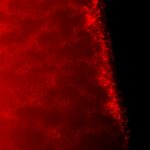
Image of a portion of a Xenopus oocyte expressing a channel receptor.
Publication : Frontiers in pharmacology

UFR2709, a Nicotinic Acetylcholine Receptor Antagonist, Decreases Ethanol Intake in Alcohol-Preferring Rats.

Scientific Fields
Diseases
Organisms
Applications
Technique

Published in Frontiers in pharmacology - 01 Jan 2019

Quiroz G, Sotomayor-Zárate R, González-Gutierrez JP, Vizcarra F, Moraga F, Bermudez I, Reyes-Parada M, Quintanilla ME, Lagos D, Rivera-Meza M, Iturriaga-Vásquez P

Link to Pubmed [PMID] – 31849674

Link to DOI – 10.3389/fphar.2019.01429

Front Pharmacol 2019 ; 10(): 1429

Brain nicotinic acetylcholine receptors (nAChRs), a heterogeneous family of pentameric acetylcholine-gated cation channels, have been suggested as molecular targets for the treatment of alcohol abuse and dependence. Here, we examined the effect of the competitive nAChR antagonist UFR2709 on the alcohol consumption of high-alcohol-drinking UChB rats. UChB rats were given free access to ethanol for 24-h periods in a two-bottle free choice paradigm and their ethanol and water intake were measured. The animals were i.p. injected daily for 17 days with a 10, 5, 2.5, or 1 mg/kg dose of UFR2709. Potential confounding motor effects of UFR2709 were assessed by examining the locomotor activity of animals administered the highest dose of UR2709 tested (10 mg/kg i.p.). UFR2709 reduced ethanol consumption and ethanol preference and increased water consumption in a dose-dependent manner. The most effective dose of UFR2709 was 2.5 mg/kg, which induced a 56% reduction in alcohol consumption. Administration of UFR2709 did not affect the weight or locomotor activity of the rats, suggesting that its effects on alcohol consumption and preference were mediated by specific nAChRs.